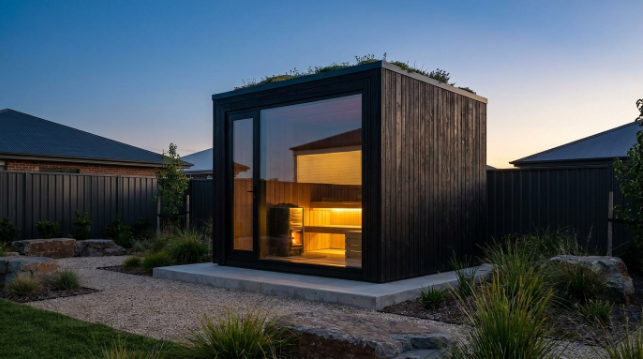
A cube sauna needs a flat, level, well-drained surface under its square skid base, and the right choice usually comes down to the yard you actually have: concrete pavers for a small patio, a compacted gravel pad for a sloped lot, an existing deck if the structure can support the weight, or extra attention to drainage in a wet climate. Unlike a round barrel, a cube’s flat-sided footprint fits neatly into a corner or against a fence line, which is often the deciding factor in a tight space.
The Renter’s Small Patio: Pavers Without Digging
For a rented property or a patio where digging is not an option, concrete deck blocks or paving stones set on leveled, compacted soil are usually the fastest legitimate base. A cube sauna’s square skid base needs support at its corners and along its edges, so blocks positioned under those load points, checked flat with a level, hold the structure steady without a permanent excavation. This setup also lifts out cleanly if a move is ever needed, which matters for anyone not planning to stay put for years.
The Sloped Backyard: Building a Level Gravel Pad
A cube sauna is less forgiving of a sloped base than some other outdoor structures, because its floor-to-ceiling glass door needs a flat frame to seal against properly, and a slight tilt across the footprint can leave a visible gap at one corner. A compacted gravel pad, cut into the high side of the slope and built up with 4 to 6 inches of crushed gravel on the low side, brings the whole footprint level before the cube ever arrives. This is worth doing carefully with a level and string line rather than eyeballing it, since correcting a tilted cube after assembly is far more work than getting the pad right the first time.
The Existing Deck: What to Check Before You Place It There
An existing wood deck can work well for a cube sauna, provided the joists and footings are rated for the load. A fully assembled 4-person cube, including the heater and stones, commonly weighs 1,200 to 2,000 pounds concentrated over a footprint roughly 6 by 6 feet, which is a meaningful point load for a deck built only for foot traffic and furniture. A contractor’s quick check of joist spacing and footing depth before ordering avoids discovering a sagging deck board months into ownership.
The Tight Side-Yard Corner: Why a Cube’s Footprint Helps
One practical advantage of a cube’s flat-sided shape shows up in tight side yards, where a round barrel sauna often wastes space around its curved edges. A cube can sit flush against a fence on two sides, leaving only the glass-front side needing clearance for the door to swing open. Buyers weighing a cube against other shapes for a narrow side yard can compare footprints across SweatDecks’ lineup before deciding, since the difference between a round and square base can matter more in a tight corner than it does in an open backyard.
The Coastal or Wet-Climate Yard: Drainage First
In a region with frequent rain or a yard that holds water after a storm, drainage under the base deserves more attention than in a dry climate. A cube’s skid base sits close to grade, so standing water pooling around it can wick moisture into the lower wood panels over repeated soakings, even with a well-built structure above. A gravel pad with a few inches of crushed stone below the skids, sloped slightly away from the structure, keeps water moving instead of sitting, which protects the base panels over years of coastal or high-rainfall use far better than a flat concrete pad with no drainage built in.
The HOA Neighborhood: Placement Rules to Check First
A cube sauna’s flat-sided, boxy shape often reads to a homeowners association more like a shed or accessory structure than a barrel sauna does, which means placement and setback rules deserve a look before any base work starts. Many HOAs regulate how close a permanent or semi-permanent structure can sit to a property line, a fence, or a rear easement, and some require a simple approval form even for something as small as a 4-person cube. Checking the HOA’s architectural guidelines, or simply asking the management company directly, before pouring gravel or setting pavers avoids the situation of building a proper base only to be asked to move the whole structure a few feet later.
Where an association does allow a cube sauna, screening it from the street with existing fencing or landscaping is often enough to satisfy aesthetic requirements without any special base modifications. Because a cube already fits flush against a fence line in a way a round barrel cannot, this is one case where the sauna’s shape works in the owner’s favor for HOA compliance as much as it does for space efficiency.
Elevating the Base a Few Inches for Airflow
Whichever base material you choose, leaving a small air gap under the cube’s skids rather than setting them flush against a solid, non-draining surface helps the underside of the structure dry out between rainy stretches. A couple of pressure-treated runners or composite shims under the skids, set on top of the gravel or pavers, lifts the wood just enough to let air move underneath without requiring a full raised deck. This small step matters more for a cube than it might seem, since the flat base has more continuous contact with the ground than a barrel’s curved cradle does, giving trapped moisture fewer places to evaporate from on its own.
Frequently Asked Questions
What is the best base for a cube sauna on a small patio? Concrete pavers or deck blocks set on leveled, compacted soil work well, since a cube’s square skid base needs even support at its corners rather than a full slab.
How do you level a cube sauna on a sloped yard? A compacted gravel pad, cut into the slope and built up on the low side, is the standard fix for a flat, level footprint.
Can a cube sauna sit on an existing wood deck? Often yes, provided the joists and footings can support the added weight, typically 1,200 to 2,000 pounds for a 4-person unit.
Why does drainage matter more for a cube sauna in a wet climate? Standing water around the skids can wick into the base panels over time, so good drainage protects the wood over years of use.
References
- Cardiovascular and Other Health Benefits of Sauna Bathing: A Review of the Evidence, Mayo Clinic Proceedings, 2018
- Clinical Effects of Regular Dry Sauna Bathing: A Systematic Review, Evidence-Based Complementary and Alternative Medicine, 2018
- Benefits and risks of sauna bathing, The American Journal of Medicine, 2001
- Effects of heat and cold on health, with special reference to Finnish sauna bathing, American Journal of Physiology, 2018
By Jake Renner